
Midlands Review of A Glass House

midlandsmovies • February 5, 2025

A Glass House


Directed by Charles Strider


2025


Pelé Rocket Films


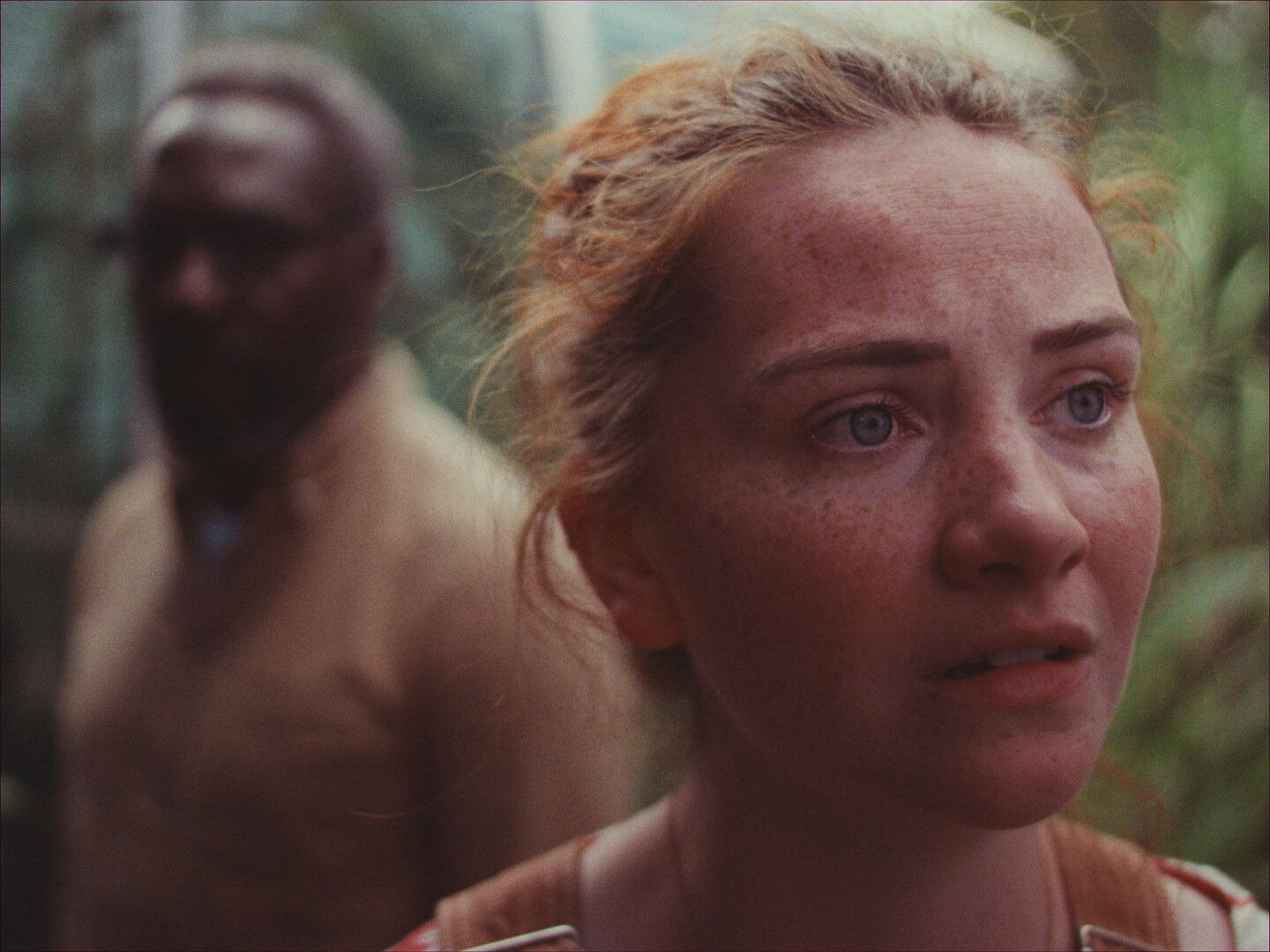
They say a cup of tea can solve everything. In Charles Strider’s debut short, A Glass House, it might not solve everything, but it can at least be the starting point for a conversation. This is a beautiful piece of work, shot on film in a 4:3 ratio, at a gorgeous location in King’s Norton, with a tight, naturalistic script that delves into difficulties around talking about our mental health.


It stars Lucy Wells as Robin, and Gary Beadle as her father-in-law Marcus, both of whom are left reeling by the sudden loss of Milo (played briefly in flashback by Doya Beardmore). Robin does her best to occupy herself in the garden – something that she admits was more Milo’s hobby than her own – while Marcus fruitlessly attempts to get her to talk to him.


Both leads give tremendous performances here. Where some actors would feel the need to add an element of dramatics, Wells and Beadle maintain just a little of that stiff-upper-lip that the film is attempting to crack. Both start the film trying to hold it together. To talk about anything other than Milo.


For Marcus, this is more paternal. Ignoring his own grief to try and provide support for Robin. Robin, on the other hand, tries to struggle through. Deal with the practicalities of losing her husband; get swallowed up by the tasks of day-to-day life. Strider’s script deals with this well, maintaining a level of ambiguity over Milo’s death, not to create tension or to maximise the impact, but to create a subtle cycle that the film intends to break.


We know that Milo took his own life, but we don’t know the reason. In fact, neither do Robin or Marcus. At the start of the film, both characters are continuing a cycle of silence that likely contributed to Milo’s own worsening mental health. Only in his grief does Marcus recognise that it’s important to discuss this. There’s also the subtle use of the garden to tell the wider story. Plants cannot grow if they are not pruned; they hold onto the past and are held back by it.


At 17 minutes long, this is a gut punch of a film, saying just enough to leave the audience reeling but never verging into heavy-handedness. It’s a stunning achievement that audiences should seek out, and one that says more in its brief running time than some films manage in 120 minutes.


★★★★½


4.5 / 5


Matthew Tilt

X (Twitter) /  Instagram


The 6th of February is Time to Talk Day. A time for friends, families, communities and workplaces to come together to talk and listen. It is run by Mind and Rethink Mental Illness, in partnership with Co-op, and delivered by by See Me with SAMH (Scottish Action for Mental Health), Inspire and Time to Change Wales. You can find out more at www.timetotalkday.co.uk


Check out the film's trailer  here

By midlandsmovies December 8, 2025
On the 4th of December 2025, as the cold moon rose, evil spirits and terrifying creatures lingered in the darkness. In rural Derbyshire, the full moon welcomed in the premiere of The Winster Werewolf – Amberwell Productions' new short, the fourth in their six-part ‘creature anthology’.
By midlandsmovies December 7, 2025
Sarah Hughes is a Midlands-based actress & TV, film and SFX artist is about to begin production on her first ever full feature film.
By midlandsmovies December 6, 2025
As part of our Midlands on the Move features, we speak to Carl Staples, a Midlands storyboarder and filmmaker with a wide range of regional experience who went on to be involved in the Oscar-winning short film The Silent Child. Find out more about Carl's work...
By midlandsmovies December 4, 2025
Our resident local film critic @_jacob.holmes headed off beyond the region's boundaries to the BFI London Film Festival. In our latest Midlands on the Move feature, Jacob shares some helpful hints for first timers, as he provides a guide for local filmmakers and film fans as to what to expect when visiting events further afield... In 2025 I had the honour of attending the 69 th BFI London Film Festival for a week, I attending premieres for some of my most anticipated films of the year. And even grabbed a press pass too. This wasn’t my first film festival, but this was my first London Film Fest and to be brutally honest, in the build-up, I was nervous! Sadly, I found the BFI and Accreditation websites not very intuitive and quite confusing. So this this article hopes to give some peace of mind and let people know what they can expect when attending such UK festivals - both as a regular guest and as press. Tickets Getting regular tickets can be stressful, akin to a big concert. And in a way it's like the Hunger Games, a survival of the fittest type of vibe. First off, BFI advertise tickets go on sale at 10am in September, which is true but not wholly accurate. Instead, at 9am you head to the website and get put in a waiting room with a random allocated number for when the actual sale start at 10am. At that time it tells you where you are in the queue. If you get lucky, you could wait 15 minutes, but often the wait can be an hour plus. Finally when you can make a purchase, you are let in and can put all tickets into your basket. I have two years of experience with this queue! The first time, I failed completely and all movies I wanted to see were sold out. But this year I had a plan! The key to success is knowledge to how to play the game. Tip 1: For the best possible chances, subscribe to the BFI and become a member. The year membership was £35 at its cheapest. And if you're in the Midlands like I am, outside the festival a membership can be fairly useless unless you go to London often. But what this membership gives you is important. A week before general release there is a presale for BFI members. Not only is this a benefit, it also gives you a crucial second chance. By that I mean if things don't go your way the first time, you can try again in the general sale. And I had to do exactly this. When general admissions came out, I tried again for tickets for Wake Up Dead Man and got my ticket! Tip 2: Quantity. There's nothing against the rules saying you can’t enter the queue on multiple devices! I was placed very low down in the queue in my first year on one laptop, but this year I used my phone, PC, laptop, my friend's laptops AND my friends' devices! But it all paid off. Devices can take 2 hours or only 30 minutes. More Devices = Higher chance of getting tickets. Tip 3: Know the films you want to see beforehand. If you don’t know what films you want to see or when they screen you will be completely lost. Write a timetable - and furthermore, have back up plans. Sometimes you'll click on what you want and it will be sold out, but having a backup plan will be much easier overall. Tip 4: Even if you don’t get tickets, it's not the end of the world. There are plenty of second-hand ticket websites selling tickets at normal (or sometimes cheaper) prices. Websites like Twickets, social media accounts like @LFFstubs on X or the r/londonfilmfestival on Reddit will have second-hand tickets. In fact, I sold one of my tickets on Twickets and had no complaints either. Press passes As you can imagine, this process is very different for industry passes. The biggest issue is tickets go on sale in waves each day. Instead of one go, pass holders book their tickets day by day. Tickets go on sale at 8am two days before, usually taking place on the accreditation app or website. In some ways this is easier, but it's also a gigantic pain. Although it's MUCH easier to get a ticket, do have to wake up every single day to go onto a laggy website and book a few tickets. You may even have to book tickets in the cinema. Another issue can be if you plan to see both general and press screenings. One you book way in advance, but press screenings are booked during the fest. Ticket prices for public screenings vary, but the gala/premiere screenings are usually £30-£40. Whilst the press screenings are completely free, you just have to pay for the pass itself which is around £55.
Show More